Gino Savaria/SkyHi News
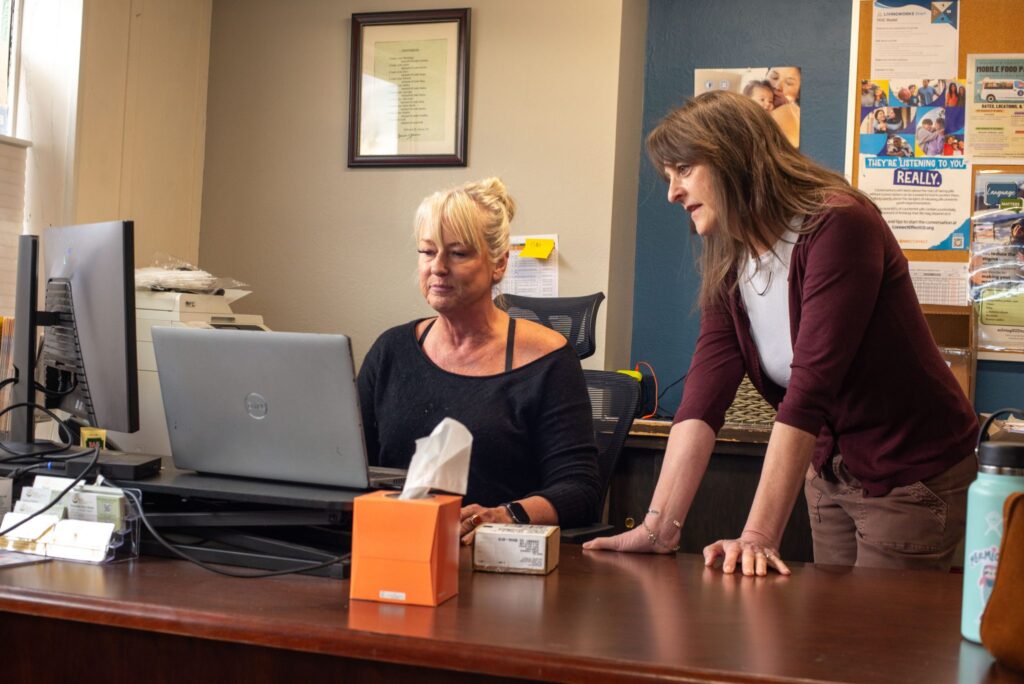
Care Coordinator, Sudi Newcomer (Left), and Strategic Development Director, Christine Smith (Right), discuss the Aches and Pains voucher program.
For low‑income residents in Grand County, finding appropriate healthcare can pose a challenge. Grand County Public Health’s 2023 Community Health Assessment and Public Health Improvement Plan identified access to affordable healthcare as a persistent community challenge.
The county lacks a federally funded community care clinic and a school‑based health center, two resources that often help reduce costs for working families. Because of the county’s rural geography, residents seeking specialty care may need to travel long distances to find available providers.
According to Lauren Stokes, Program Director at the Grand County Rural Health Network, county characteristics such as a seasonal workforce, high living costs, high insurance rates and limited access to employer‑sponsored insurance exacerbate these coverage gaps. From 2018 to 2023, the United States Census Bureau reported that on average, 11.2% of Grand County residents were uninsured, compared with a statewide average of 9%.
As changes to Medicaid roll out over the next several years, the state’s healthcare landscape will continue to shift. Gaps in coverage and uncertainty are expected to expand and contract along the way.
The Grand County Rural Health Network’s Community Health Programs help residents minimize those gaps. Stokes said all services are free and provided in English and Spanish. The programs are designed to simplify access to medical, dental and behavioral health resources, reducing the financial and logistical barriers that often prevent people from seeking treatment.
ACHES and PAINS healthcare vouchers
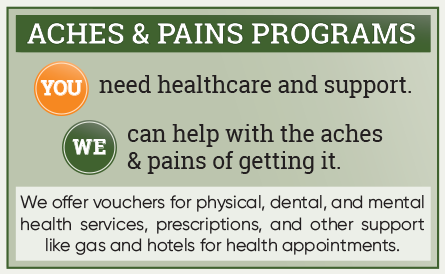
The Rural Health Network’s ACHES and PAINS program provides financial assistance for residents who struggle to afford basic medical, dental or behavioral health care. The vouchers are available to community members who are uninsured or underinsured and whose incomes fall below the local Self Sufficiency Standard.
The program covers primary care visits for acute and non‑emergency needs, well‑child exams, mental health appointments, dental care for children and pregnant people, prescriptions and supportive services such as gas cards or medical supplies. Residents can access the vouchers through their healthcare provider or by contacting the Rural Health Network directly.
Since 2020, the voucher program has seen growing demand, particularly for behavioral health services. According to the Rural Health Network, 90% of all 2025 adult vouchers and half of all children’s vouchers were used for mental health care. Another 28% of children’s vouchers helped families access dental care.
Since the program began in 2005, it has served more than 3,200 children and adults. In 2025, the program covered at least $93,300 in healthcare and supportive services.
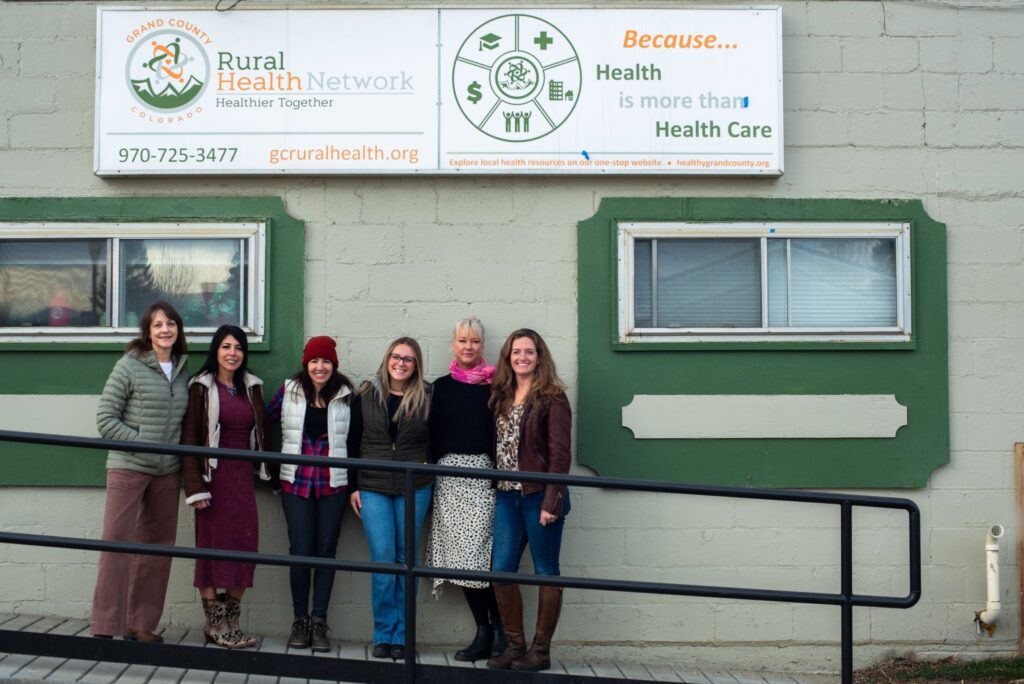
. Grand County Rural Health Network poses in front of their Granby building.
Patient Navigation
The Rural Health Network’s patient navigation program helps residents overcome barriers to accessing medical care. The free service is available to anyone in Grand or Jackson counties who needs support finding providers, understanding diagnoses, coordinating appointments or accessing financial and community resources.
Health navigators and care coordinators meet with residents one‑on‑one to help them understand their health needs and plan the next steps. They assist with finding doctors, dentists or therapists, communicating with providers, reviewing medications, applying for benefits, sorting through medical bills and arranging transportation when needed. Navigators also work with clients to build the confidence and skills they need to manage their care independently.
Health Coverage Assistance
The Rural Health Network also offers health coverage assistance for residents who need help understanding or enrolling in insurance. Staff guide clients through Medicaid applications, Connect for Health Colorado marketplace plans and other coverage options.
Stokes pointed out that the Rural Health Network anticipates an increase in need for this program in the coming years. As changes roll out, they expect more residents seeking help to reapply or understand their eligibility.
“We anticipate an increased need for this type of program and potentially reduced funding for it,” Stokes said.
While these are three of the Rural Health Network’s most frequently used services, the organization operates several other programs that support residents with complex or specialized needs.
- The Promotora de Salud program provides culturally informed assistance for Spanish‑speaking residents who need help understanding health issues or navigating local resources.
- The Recovery Support program, led by Certified Peer and Family Specialists, offers individual and group assistance for people affected by substance use. The program offers help with treatment coordination, support during and after incarceration, establishing a recovery community and coaching for friends and family members who want to learn how best to support a loved one struggling with substance use.
- The Youth Wraparound program delivers intensive, family‑centered support for young people with significant behavioral health concerns, connecting them with providers, schools and community services to help youth get the care they need while staying in their home community.
Funding challenges moving forward
The Rural Health Network relies on a braided funding model that blends local grants, private donations and support from towns and county government. Stokes said this approach helps keep core programs stable by preventing the organization from depending on any single funding stream. The model has allowed the Network to maintain services even as individual grants fluctuate or short‑term funding cycles end.
But state and federal changes could reshape the landscape in the coming years. Colorado is expected to receive more than $1 billion in new federal rural health funding through 2030, according to the Colorado Department of Health Care Policy and Financing. The money will support rural hospitals, community clinics, behavioral health providers and emergency medical services.
Still, rural health leaders have noted that the new funding will not offset the scale of upcoming Medicaid reductions. The Congressional Budget Office projects national Medicaid spending will fall by $1 trillion over the next decade, and the Colorado Hospital Association estimates state hospitals could lose $10.4 billion by 2032 due to changes in federal policy.
Stokes said the Network expects increased demand for vouchers, navigation services and insurance support as residents face rising costs and potential changes to public and private insurance. She said the expiration of federal premium tax credits and future Medicaid policy shifts could increase the number of uninsured residents, putting additional pressure on local safety‑net programs.
To prepare, the Network plans to continue diversifying its funding sources and strengthening partnerships with local governments, nonprofits and healthcare providers. Stokes said the organization is focused on maintaining flexibility to respond quickly as policies change and residents’ needs shift.
“We often see the impact hitting nonprofits before other systems can compensate,” she said. “Our goal is to stay ahead of those changes so people don’t fall through the cracks.”